

The cost of pest control services can be influenced by several factors, including the type and severity of the pest infestation, the size of the property, the treatment method required, and the frequency of the service.
Yes, we provide detailed quotes before starting any service, so you know exactly what to expect in terms of cost and treatment plan.
No, we are transparent with our pricing. There are no hidden fees or additional costs beyond what is discussed in your quote.
We don’t charge to come out and make the inspection. This initial visit is free of charge.
Our typical process includes an initial inspection, identification of the pest issue, recommendation of the best treatment plan, and execution of the treatment. We also provide follow-up visits to ensure the problem is resolved.
The duration of a treatment session can vary based on the type of pest and the extent of the infestation. Generally, it can take anywhere from 30 minutes to a few hours.
Yes, our pest control methods are safe for children and pets. We use eco-friendly products and ensure minimal disruption to your home environment.
Results can vary depending on the pest and treatment method, but you can typically expect to see a significant reduction in pest activity within a few days.
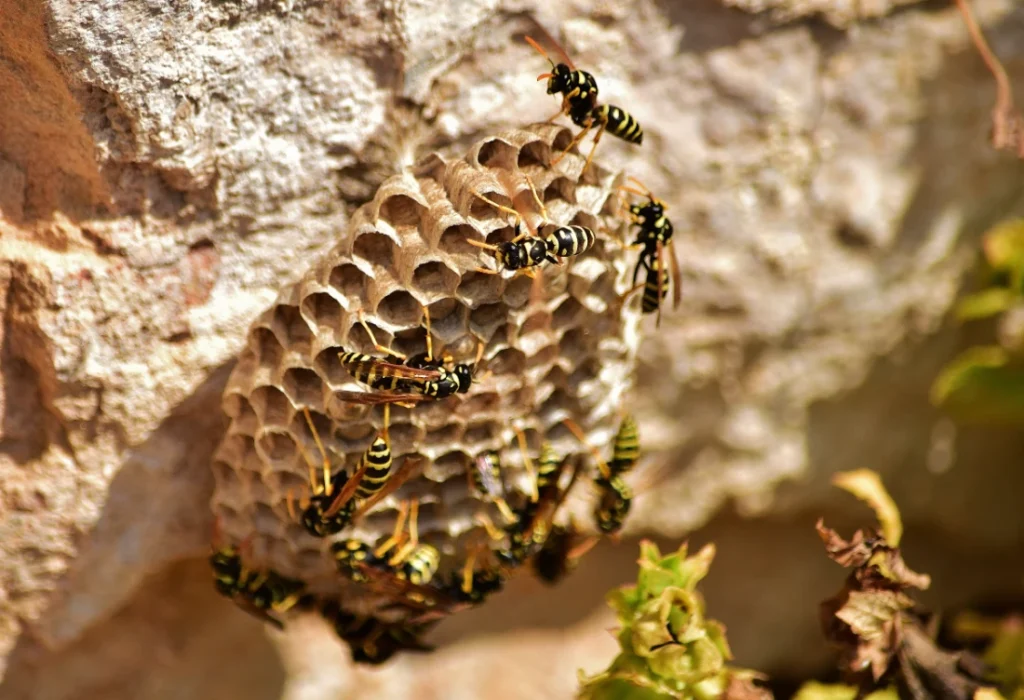
Honeybees are pollinators and are very beneficial and often docile and will not cause much trouble if left alone. The other three are the more troublesome and often aggressive. They attack and eat bugs in and around your home. Some consume as much as 1000 bugs a season. With populations ranging from a couple hundred to 3000 or more, this equates to them killing quite a few bugs per season.
Most wasp/yellow jacket sprays will kill bees/wasps to an extent and have mild chemicals inside them. Always read the label before applying. Small nests the size of a softball or smaller on the exterior of the home can be sprayed by an over-the-counter spray and knocked down with a long pole or something that can easily reach the area. Bees/Wasps traveling inside a home via an opening in the siding or a roofline will require more than an exterior application of pesticide.
Wasps and yellow jackets often make their home inside wall cavities or rooflines. These nests vary in size from the size of a softball to the size of a basketball and even larger. They can contain as little as 100 to as much as 3000 or more wasps/yellow jackets. Wasps and yellow jackets fiercely protect their nest by hiding it deep in the structure(1-5 feet inside the wall cavity) making sprays and dusts ineffective in most scenarios. They will also attack any predators (you and I included) that try to invade their space or mess with their nest. To eliminate these situations, you often need to drill into the siding and inspect the area until you find the nest and apply pesticides directly to the nest. In some cases, the drywall gets eaten by the yellow jackets and repairs to the drywall may have to be made. Removing the nest from the structure is the best way to ensure that the problem is completely gone and applying pesticides that last 30 days or more to the exterior to prevent other wasps/yellow jackets from coming back to the nest
Wasps and yellow jackets often make their home inside wall cavities or rooflines. These nests vary in size from the size of a softball to the size of a basketball and even larger. They can contain as little as 100 to as much as 3000 or more wasps/yellow jackets. Wasps and yellow jackets fiercely protect their nest by hiding it deep in the structure(1-5 feet inside the wall cavity) making sprays and dusts ineffective in most scenarios. They will also attack any predators (you and I included) that try to invade their space or mess with their nest. To eliminate these situations, you often need to drill into the siding and inspect the area until you find the nest and apply pesticides directly to the nest. In some cases, the drywall gets eaten by the yellow jackets and repairs to the drywall may have to be made. Removing the nest from the structure is the best way to ensure that the problem is completely gone and applying pesticides that last 30 days or more to the exterior to prevent other wasps/yellow jackets from coming back to the nest
Often you are gardening or mowing and hit a ground nest. Sorry, that happened to you, and it hurts. These are the easiest nests to be rid of. An application of pesticide dust labeled for bees can be applied at night when the nest is dormant(completely dark outside). Sneak up on the nest(if they feel vibration they will come out and attack) and apply the dust either in the morning before the nest is active or at night once all of them are inside. Apply liberal amounts of dust to the hole during these times to ensure each pest gets a healthy dose. The other method is to take about ½ a cup of gasoline and Remember gasoline is flammable and it is not necessarily the best method.
A typical application will range from $175 to $250 for an exterior application and exterior nest removal. A more involved extermination(higher places or removing walls) will be more money and varies greatly.
Wildlife becomes a nuisance when animals start damaging your property or pose a threat to you and your family.
EXCELLENT Based on 151 reviews
 Posted on Google
 Sandra HuttonJames, the owner of Critter Control, responded promptly to my call about the rabbits eating my flowers. His option of trapping them for us appealed to me be there were concerns about our little dog. Instead he gave us several ideas on how to make them feel unwelcome and now they are gone. Such a nice guy!Posted on Google
 Kayla HarrisReally appreciative of James! He took his time to explain everything to me and is working diligently to resolve the issue. I definitely recommend giving Critter Control a call!Posted on Google
 Abdul EmadiWe had a breached crawlspace and roof fascia. Nate and Trayvon were able to repair it all very efficiently and expertly, as well as flawlessly match the new walls to the siding on the rest of my home. Will recommend to all!Posted on Google
 Thea ElliottI could not be more happy with my experience with this company!! They came out the next day and started the work that day!!!!! They were extremely reasonably priced (half the price of a big competitor) highly recommend for all your wild life needs!!!!Posted on Google
 James JonesMy experience with James has been outstanding. He is so helpful and worked hard to solve my problem of squirrels in attic. He listens to concerns and is kind and knowledgeable. I would call James any time I have a problem.Posted on Google
 Allison HannaBig thank you to Critter Control for helping us with our very unexpected chimney visitor situation. What we all thought was a squirrel turned out to be a turkey vulture stuck in our chimney! Nate was fantastic throughout the whole process—super personable, easy to talk to, and kept things lighthearted during a pretty bizarre situation. He was responsive, professional, and genuinely cared about helping us get the bird out safely. Hopefully we never need critter removal for a vulture in our chimney again… but if we do, we know exactly who to call!Posted on Google
 Jody EchterlingI would highly recommend this company based on their integrity and honesty assessing my situation!Posted on Google
 Katelyn FisherCalled critter control of Carlisle for a bird nesting in our upstairs vent. James was able to schedule me two days later and came out and removed the nest and put cages over the vent opening. Amazing to work with & reasonably priced! Would absolutely call again!Posted on Google
 Ramesh SubramanianI had a squirrels nest on my roof under the Solar panels. I was referred to Critter Control of Carlisle by Ehrlich. James from Critter Control of Carlisle came the same day and offered valuable advice that put my anxiety to rest. They took care of the situation in accordance with PA state regulations without harming the squirrels. There should be more companies like this where you can get human interaction right away when you need them.Posted on Google
 Elena CrossAfter calling multiple other places, I tried Critter Control of Carlisle and immediately got James. He was so friendly and knowledgeable. It was a snake issue and he could immediately identify the type of the snake and what we needed to do (and what we didn’t have to do). He gave me options based on my comfort level. I would reach out again with snake or other wildlife issues.
We control rodents, provide bait stations and recurring service, remove larger vertebrate pests and perform an integrated variety of control approaches to wildlife management and animal damage repair and prevention.